
Indian Paediatrics & Critical Care
Loading QBank Portal & Clinical Guidelines...
Loading QBank Portal & Clinical Guidelines...
Practice subtopic-wise clinical stations, one at a time, with a timed 4-minute timer & examiner checklist solutions.
Pick a subtopic from the left, review the module card, then hit Start Module.
0 Clinical Stations
STATION 5
Look at this acid-base nomogram and
correctly label A to F.
Marks
= 1*5 = 5
A.
………………………..
B. .………………………
C. .………………………
D. .………………………
E. .………………………
F.
………………………..
ANSWER
KEY STATION 5
ANSWER
A. Metabolic acidosis
B. Acute respiratory alkalosis
C. Chronic respiratory acidosis
D. Acute respiratory acidosis
E. Metabolic alkalosis
F. Chronic respiratory alkalosis
 |
STATION 6
A
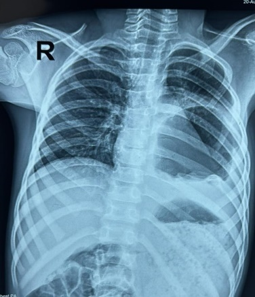
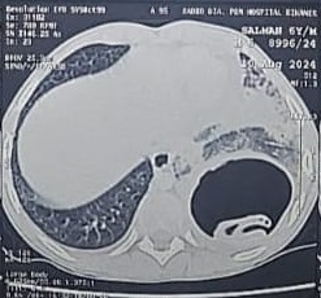
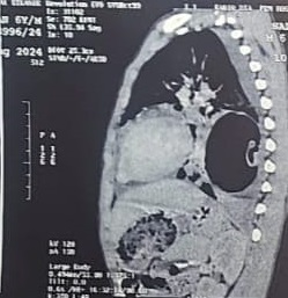
10 year old child came with C/O difficulty in breathing, coughing, nausea,
vomiting, for 1 month, CBC showed eosinophilia, he was evaluated by
chest X-Ray, and then advised CT chest?
Marks
è 0.5*5=2.5
Q 1)
Identify
the pathological sign in chest
X-ray And CT chest?
0.5*2=1
Q 2)
Clench
the diagnosis and Write most common causative agent? 0.5*2=1
Q 3)
Name
the Most common organ involved by above agent other than lung? 0.5
Q 4)
Write
definitive treatment of choice in above condition? 1
Q 5) Write one precautionary measure during the definitive treatment of this condition? 0.5
Q 6)
Write
any 2 contraindications of pharmacotherapy? 0.5*2=1
ANSWER KEY STATION 6 A
Ans. 1)
Chest
X-Ray P/A view à
large cavitary lesion in the left lower zone with internal air
containing membranous structure capped by an air crescent—the ‘cumbo sign
A CT scan chest à cyst in left lower lobe of the lung containing a
freely floating endocyst (the “water lily sign / Camelotte sign”)
Ans. 2)
Echinococcus
granulosus – most common
Note :- either any one below may give answer
1.
Echinococcus
granulosus: infections
cause cystic echinococcosis, also called hydatidosis.
2.
Echinococcus
multilocularis:
infections cause alveloar echinocccosis.
3.
Echinococcus
vogeli: infections cause
polycystic echinococcosis.
4.
Echinococcus
oligarthrus: infections
cause polycystic echinococcosis
Ans. 3)
Primarily
infect LIVER – most common then bypass to Lungs.
Ans. 4)
Large
cysts that are superficial and likely to rupture, infected cysts, cysts in
vital anatomical locations, and cysts exerting substantial mass effect è SURGICAL INTERVENTION required
è
·
enucleation,
·
pericystectomy,
·
cystostomy
with capitonnage,
·
open
aspiration, and lung resection. (lobectomy)
Ans. 5)
Prevent
intraoperative spillage
by placing gauze soaked with a hypertonic saline solution (20%) or
povidone-iodine solution
Ans. 6)
Contraindication
of pharmacotherapy è
Large cysts that
are at risk of rupture
Inactive or
calcified cysts
Bone marrow
depression
Pregnancy,
specifically the first trimester of pregnancy.